
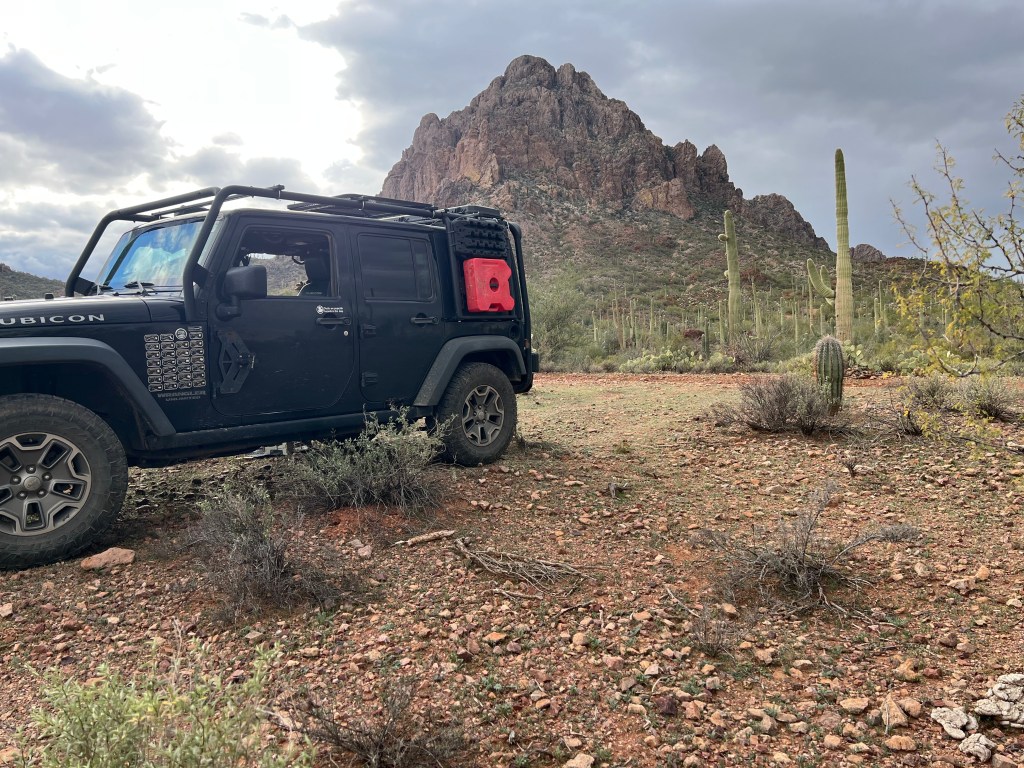
If you’ve ever taken a rig off the pavement and onto a washboard forest road or a rocky shelf in the high desert, you know the feeling. At highway pressure—say, 35 or 40 PSI—the ride is efficient and fast on smooth asphalt. But the second you hit the dirt, that same pressure becomes your worst enemy. Every pebble feels like a pothole, your teeth rattle, and your tires lose their grip, spinning uselessly against the terrain.
To survive the trail, you have to do the counterintuitive thing: You have to air down.
As a therapist with 20 years in the high-intensity world of forensic psychology, I’ve realized that most of us are living our lives at “highway pressure.” We are rigid, over-inflated, and moving too fast. And when life turns into a rocky trail, we wonder why we’re breaking down.
The Science of the “Footprint”
In overlanding, we drop our tire pressure to increase the “footprint.” A softer tire wraps around a rock instead of bouncing off it. It creates more surface area, providing the traction needed to climb out of a rut.
In mental health, specifically within Behavioral Cardiology, we see the physiological cost of staying “fully inflated.” When your internal pressure is maxed out by chronic stress, your cardiovascular system becomes brittle. You lose your “give.” Like a high-pressure tire hitting a sharp rock, you are far more likely to suffer a puncture—a burnout, a health crisis, or a breakdown in your relationships.
Expanding Your Mental Surface Area
“Airing down” your mind isn’t about being “soft” or lazy; it’s a mechanical necessity for navigating difficult terrain. Mindfulness and intentional decompression allow your “mental footprint” to expand.
When you are “aired down” through grounding and mindfulness:
* You Wrap, You Don’t Snap: You develop the flexibility to sit with a stressor, understand it, and move over it, rather than letting it jar your entire system.
* You Gain Traction: In a “sleepless spiral” or a high-stakes professional moment, a rigid mind spins its wheels. A decompressed mind finds the grip to move forward.
* You Protect the Vehicle: Lowering your internal pressure preserves your heart health and your nervous system, ensuring you have enough “tread” left for the long haul.
Finding Your Decompression Valve
We don’t air down for the sake of staying low. We do it so we can reach the places the highway can’t take us—the quiet ghost towns, the remote vistas, and the peace of the backcountry.
But you can’t wait until you’re already stuck in the mud to look for your deflators. You have to make “airing down” a ritual. Whether it’s five minutes of breathwork before a difficult session or “unplugging” to head into the pines, you are doing the maintenance required for the journey.
The Trail Ahead
If you feel like every bump in the road is hitting you harder than it used to, check your gauges. You might just be carrying too much pressure for the terrain you’re on.
It’s time to pull over, take a breath, and air down. The view at the end of the trail is worth the adjustment.
Ready to find some traction? Join me over at my YouTube channel, [Airing Down the Mind], for guided meditations designed to help you decompress and navigate the “off-road” moments of life.
 LPC | Behavioral Cardiology | Adventure Therapy
Leave a comment